
How to Order Noodles in Thai: Noodle + Broth + Meat
Thai noodle orders are a sandwich. Type of noodle, broth or dry, meat, anything else. Ao bà-mìi náam-dtòk mǒo khâ. Then you eat.
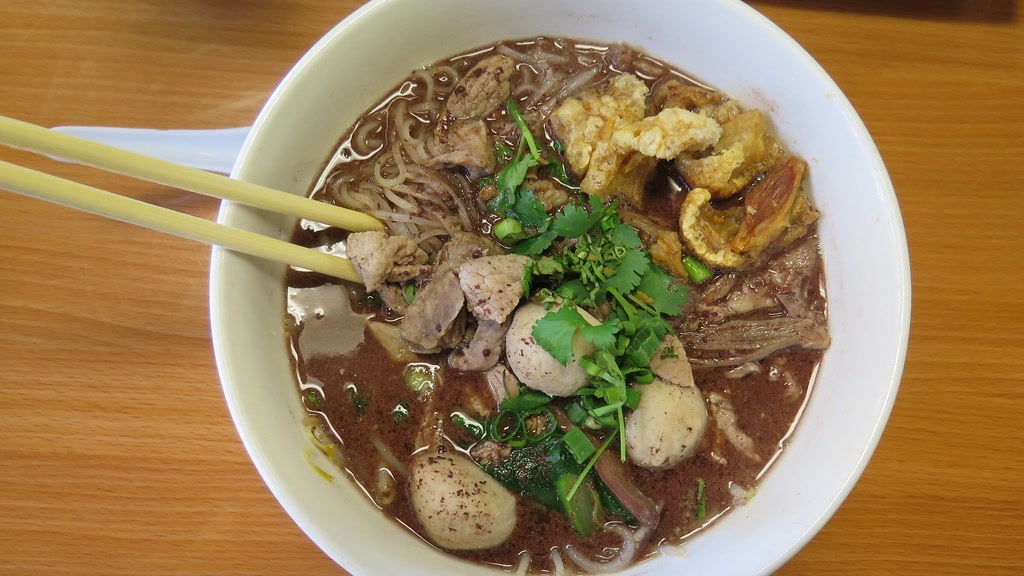
English orders noodles like a novel. Hi, could I please get the egg noodles, in the spicy dark soup, with pork, thank you so much. Thai orders noodles like a sandwich. Four fillings. No speech.
Type of noodle + broth + meat + anything else.
That is the whole sport. Ao bà-mìi náam-dtòk mǒo khâ. I will take egg noodles, waterfall soup, pork, polite particle. The stall already knows you are hungry. You just have to name the bowl.
Day-one starter kit
- The verb: เอา ao (I’ll take)
- The sandwich: noodle + broth + meat
- Soup or dry: น้ำ / แห้ง náam / hâeng
Stick ค่ะ khâ or ครับ khráp on the end. Then sit down before someone else takes the plastic stool.
The whole sandwich, out loud
เอาบะหมี่น้ำตกหมูค่ะ
ao bà-mìi náam-dtòk mǒo khâ
Egg noodles, waterfall soup, pork, please. (This is the recipe. Steal it.)
How to order noodles in Thai
A Thai noodle stall is not waiting for your life story. It is waiting for a stack of nouns.
You do not need ก๋วยเตี๋ยว (gǔay dtǐao) every time, even though that is the umbrella word for this whole universe. Point at the cart and start with the noodle. Then say whether you want soup. Then say the animal. Then, if you are fancy, add special, no bean sprouts, not spicy. Done. The auntie is already reaching for the strainer.
Ao is “I’ll take.” Khǒr is “may I have.” Both work. Ao is what the regulars use when they are not performing manners for a textbook. You can still be polite. That is what khâ and khráp are for.
Read it left to right like a receipt. That is how the stall hears it. If you reverse the order they will still feed you. They will just file you under “cute foreigner who tried,” which is a fine club, but you came here to sound like you have done this before.
Thai noodle names you actually say
These are the noodles. Not the soup. Not the pig. The pasta aisle.
เส้นเล็ก
sên lék
thin rice noodles
The default skinny ones. Boat-noodle energy.
เส้นใหญ่
sên yài
wide rice noodles
The belts. Chewy. Serious.
บะหมี่
bà-mìi
egg noodles
Yellow. Springy. The one in the example.
เส้นหมี่
sên mìi
rice vermicelli
Thinner than thin. Almost hair.
วุ้นเส้น
wún sên
glass noodles
See-through. Slippery. Fun to lose.
เกาเหลา
gao lǎo
no noodles
The soup and the stuff. Pasta fired.
Gǔay dtǐao is the family name. Sên lék is a child. If you say gǔay dtǐao and stop, they will ask which noodle. Save everyone a round trip. Name the noodle.
Gao lǎo is the joke hiding in the menu. You walked up to a noodle stall and ordered a bowl with the noodles removed. That is allowed. That is popular. That is how you get the broth, the meat, the meatballs, and none of the homework.
Thin noodles, soup, pork
เอาเส้นเล็กน้ำหมูครับ
ao sên lék náam mǒo khráp
Thin rice noodles, soup, pork. (The weekday default.)
The noodles called in sick
เอาเกาเหลาน้ำตกหมูค่ะ
ao gao lǎo náam-dtòk mǒo khâ
No noodles, waterfall soup, pork. (Still a noodle order. Thai is like that.)
Nam, haeng, and nam tok
This is the fork in the road. Soup or not soup. Plus the one soup that has its own fan club.
น้ำ
náam
Water, and also broth. If you say náam after the noodle, you want it wet. Most bowls. Most days. The photo at the top of this page is a wet bowl. You can tell because a spoon is involved in your future.
แห้ง
hâeng
Dry. The noodles still get sauce. They just do not get a swimming lesson. If you only remember one extra word from this page, make it hâeng. Pointing at a wet bowl and saying hâeng is how you start a short, confusing play.
I want it wet
เอาน้ำค่ะ
ao náam khâ
Soup, please. (After they already know the noodle, or when you are answering the follow-up.)
I want it dry
เอาแห้งค่ะ
ao hâeng khâ
Dry, please. (Sauce, not a pond.)
Then the named broths. You do not have to learn every auntie’s secret recipe. You need the ones written on the sign in leftover marker.
Náam-dtòk means waterfall. The soup is not a picnic. It is dark, it is spicy, it often leans pork, and the traditional version is not shy about offal. If the bowl in the photo looks like it has opinions, that is the family. Boat noodles sit nearby, gǔay dtǐao reua, small bowl, big feelings.
You can stack it: noodle + náam-dtòk + meat. That is the bà-mìi náam-dtòk mǒo move. You can also go noodle + hâeng + meat and skip the pond entirely.
Wide noodles, dry, chicken
เอาเส้นใหญ่แห้งไก่ค่ะ
ao sên yài hâeng gài khâ
Wide rice noodles, dry, chicken. (Hâeng doing the important job.)
Meat in the bowl
Pick an animal. Or pick a ball of animal. The stall is not judging. It is portioning.
หมู
mǒo
pork
The default. If you freeze, say this.
ไก่
gài
chicken
Safer for the cautious stomach.
เนื้อ
núea
beef
Darker broths love this.
ลูกชิ้น
lûuk chín
meatballs
The bouncy ones. A whole personality.
กุ้ง
gûng
shrimp
When the stall has them. Not every cart.
หมูกรอบ
mǒo gròp
crispy pork
Crackling. The correct life choice.
Dtàb is liver. Krûeang nai is the mixed insides. You will hear them. You do not have to start there. Pork, chicken, beef, meatballs. That is a full career.
Some stalls let you mix. Mǒo plus lûuk chín is a normal kind of greedy. Say both. They have heard worse.
Anything else
This is the optional fourth slot. Skip it and you still get lunch. Use it when you have opinions.
Phí-sèet is the one you will hear constantly. It is not a secret menu. It is “put more in.” If you want meatballs and you want the bigger pile, the sandwich gets another slice.
Thin noodles, soup, meatballs, extra
เอาเส้นเล็กน้ำลูกชิ้นพิเศษครับ
ao sên lék náam lûuk chín phí-sèet khráp
Thin noodles, soup, meatballs, special. (The fourth slot reporting for duty.)
Condiments live on the table: fish sauce, chili, sugar, vinegar. That is not the order. That is homework you do after the bowl arrives. Do not try to specify your vinegar-to-chili ratio before they have handed you chopsticks. You will lose the plot, and also the stool.
Put the sandwich together
Three bowls. Same grammar. Different lunch.
- Egg noodles, waterfall, pork. Ao bà-mìi náam-dtòk mǒo khâ.
- Wide noodles, dry, chicken. Ao sên yài hâeng gài khâ.
- Thin noodles, soup, meatballs, extra. Ao sên lék náam lûuk chín phí-sèet khráp.
If your brain dumps the Thai at the last second, point at a noodle, say náam or hâeng, say mǒo, add khâ. That is a legal bowl. The stall has seen worse. The stall has seen people order in English and then look surprised when the soup is spicy. You are already winning.
Need phêe for the person holding the strainer? Family words as you live in the kinship guide. Need a polite I first? Thai pronouns. Then come back and eat.
Thai noodle order cheat sheet
If this were a stall sign written for tourists who actually want to get it right:
You do not need every noodle on day one. You need ao, one noodle, náam or hâeng, and mǒo. The rest is seasoning you add when the soup already tastes like something.
Practice the audio a couple of times. Say the sandwich out loud like you mean it. Then go eat. The stall will still be there. The stool might not. Move.